
Sugar Lakes' Reported $600 Resale Certificate Fee: What Sellers Should Check
September 17, 2026
September 17, 2026
Why does a Sugar Lakes HOA directory list a $600 resale certificate charge when the number attached to every "Texas HOA fee cap" article circulating online is $375?
The directory lists two separate figures: a $600 resale certificate fee and a $200 transfer fee. It does not establish that a $600 invoice total is made up of those two charges. The $375 cap applies to the certificate fee, so an itemized invoice is needed to understand what a seller is being charged.
Texas Property Code Section 207.003 governs what a subdivision homeowners association can charge to produce a resale certificate, the document a buyer's title company requests before closing to confirm assessments, reserves, pending litigation, and any right of first refusal attached to the property. The statute, amended effective September 1, 2021, sets a hard ceiling:
A property owners' association may charge a reasonable and necessary fee, not to exceed $375, to assemble, copy, and deliver the information required by this section.
FirstService Residential notes that a separate cap of $75 applies if you need an updated certificate within 180 days of the original.
What the statute does not cap is a transfer fee, a distinct administrative charge some associations levy when ownership actually changes hands, covering the cost of updating the association's records, reissuing gate or amenity credentials, and similar back-office work. That fee lives outside Section 207.003 entirely.
That is why the invoice breakdown matters.
For Sugar Lakes, a third-party HOA directory lists the following figures under the Sugar Lakes Homeowners Association, Inc., which is managed by Creative Management Company and covers the Sugar Lakes, 400 Oyster Bay, Oyster Bay, and Baybridge at Sugar subdivisions in ZIP code 77478:
| Line Item | Statutory Cap | Reported Amount |
|---|---|---|
| Resale certificate fee | $375 | $600 |
| Transfer fee | Not capped by §207.003 | $200 |
The directory lists a $600 certificate fee, which is above the $375 cap, and a separate $200 transfer fee. Those figures do not establish what a particular seller was charged or how an invoice labels the charges. If an invoice bundles charges under one label, ask for an itemized breakdown before deciding whether the cap has been exceeded.
This is not a criticism of the Sugar Lakes association specifically. It is how resale invoicing works across most Texas subdivisions with a management company handling the paperwork. The certificate fee and the transfer fee get quoted together often enough that most sellers never think to ask which part is which, and most closings move forward without anyone checking.
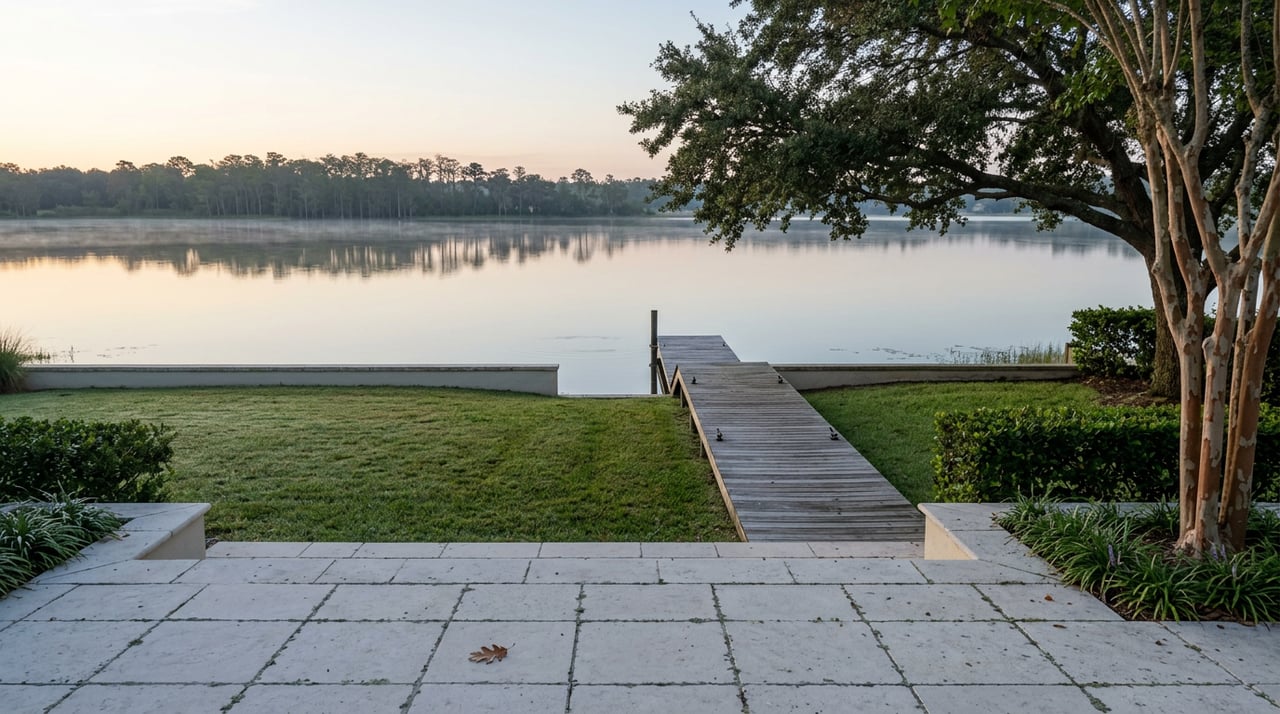
The association maintains the lakes, the recreational facilities, and the deed restrictions that keep the neighborhood's architecture consistent.
The practical stakes are modest in dollar terms but real in principle. The key question is what the transfer fee is based on and whether it is disclosed separately in the certificate itself.
None of this requires an attorney at the closing table. It requires knowing that "resale certificate fee" and "transfer fee" are two different legal categories wearing one label on most invoices.
Does the $375 cap apply to every HOA in Sugar Land, or just Sugar Lakes? The cap applies to any residential subdivision or townhome property owners' association in Texas, so it covers the broader pattern across Fort Bend County, not just this one neighborhood. Sugar Lakes is simply the specific case with a documented reported figure worth examining.
What happens if the association misses the 10 business day deadline? Texas HOA Legal says an owner can pursue damages up to $5,000, a figure the legislature raised from $500 in the 2021 amendment.
Is a $200 transfer fee reasonable? There is no statutory ceiling to measure it against. If it is not itemized, that is worth asking about before closing rather than after.
If you are buying or selling in Sugar Lakes and want someone who reads the invoice before it reaches the closing table, not after, the team at Fort Bend Real Estate Corporation has spent decades untangling exactly this kind of local detail. Schedule a Consultation and we will walk through your specific transaction, line by line, before anything gets signed.
This article is general information, not legal, tax or financial advice. Consult a qualified professional about your situation.

Tell us about your real estate goals, and we'll help you navigate the process with confidence and ease.

Fort Bend Real Estate Corporation
8410 HIGHWAY 90A STE 120 SUGAR LAND TX 77478