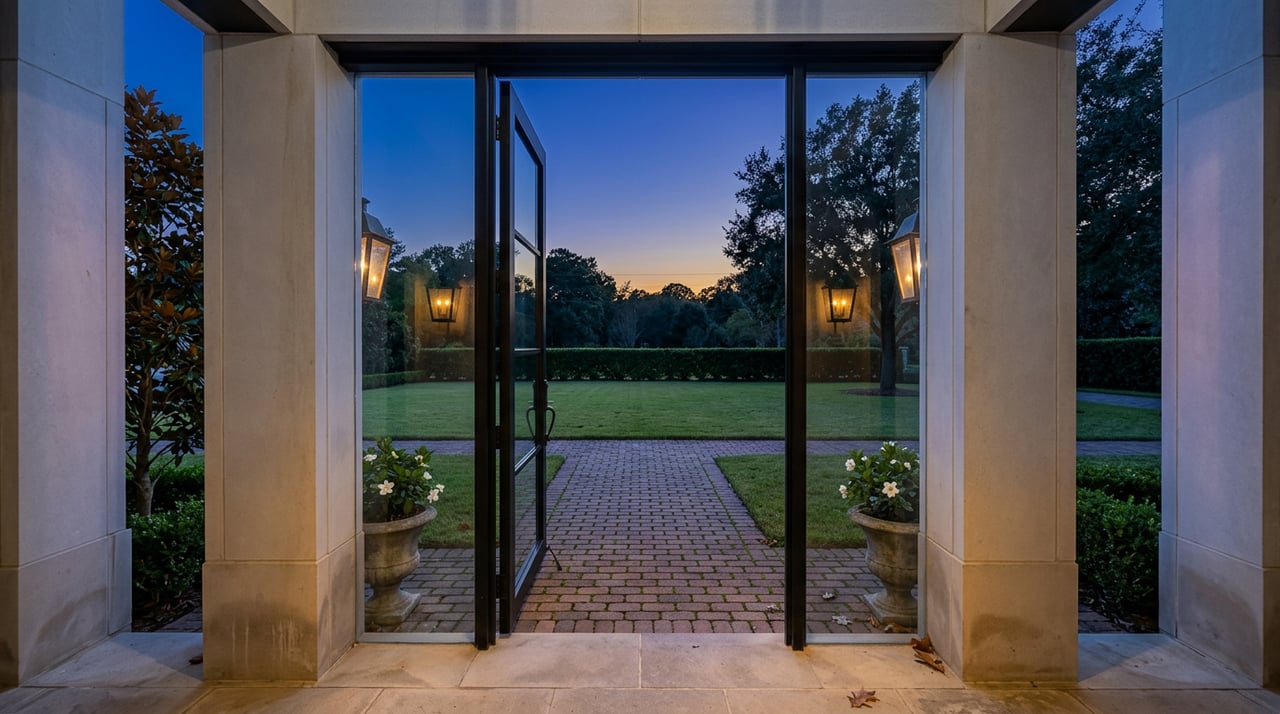
The Median Isn't the Market: A Sugar Land Case Study in Sugar Creek and Venetian Estates
September 17, 2026
September 17, 2026
In March 2026, Redfin's neighborhood page for Sugar Creek reported a median sale price of $465,000, down 15.5 percent from a year earlier. Homes were taking 28 days to sell, up from just 8 days the year before. It read like a neighborhood in real trouble.
By the time the same page's price history chart updated for June 2026, the median had moved to $514,821, down only 2.4 percent year over year. A later snapshot from the same page, reflecting sales through the summer, put the average sale price at $510,000, up 2.0 percent year over year. Three pulls from the same URL across a single year, three different stories about the same streets. None of them were wrong. They were all measuring a market too thin to hold still.
That instability is the actual story for anyone comparing Sugar Creek and Venetian Estates, two of Sugar Land's original neighborhoods, both built before the city's master-planned communities existed, both still trading on reputations formed decades ago. Neither one has enough monthly transactions for a single median number to mean much on its own. What moves the needle is something a headline stat can't show you: which specific street, section, or lot type a given house sits in.
Sugar Creek sold 17 homes in March 2026, up from 9 the year before. That is a healthy increase in activity, but it is also a small enough pool that one unusual sale can swing the median by tens of thousands of dollars. Look at what was actually on the market in the neighborhood around that period: a 3,156-square-foot house on Fairway Drive listed at $378,500, a 2,424-square-foot house on Audubon Court at $420,000, an $875,000 home on Country Club Boulevard at 3,690 square feet, and a 7,491-square-foot estate on Sugar Creek Boulevard itself listed at $1,797,000.
Those four homes alone span a $1.4 million range inside one subdivision. If March's closings happened to lean toward the smaller end of that range, the median drops hard. If a golf-course estate closes in June, the median jumps back. The neighborhood didn't change value by 13 percentage points in three months. The sample changed.
This matters because Sugar Creek's identity, at least publicly, rests on its country club. The community was built around Sugar Creek Country Club, whose three golf courses carry the Robert Trent Jones Sr. name, alongside tennis courts, pools, and a fitness center. It is worth noting what Sugar Creek is not: despite that pedigree, it does not appear on the published lists of Sugar Land's guard-gated communities, the ones that group Sweetwater, Riverstone, and Telfair. Sugar Creek's streets are open. Its exclusivity comes from the club membership and the golf-course lots, not a gatehouse. That is a meaningful distinction for a buyer who assumes "country club neighborhood" automatically means "gated," and it is exactly the kind of detail a single median price will never surface.
Sugar Creek's volatility comes from too few sales. Venetian Estates has enough listing activity to show a clearer pattern, and that pattern is a split market rather than a noisy one.
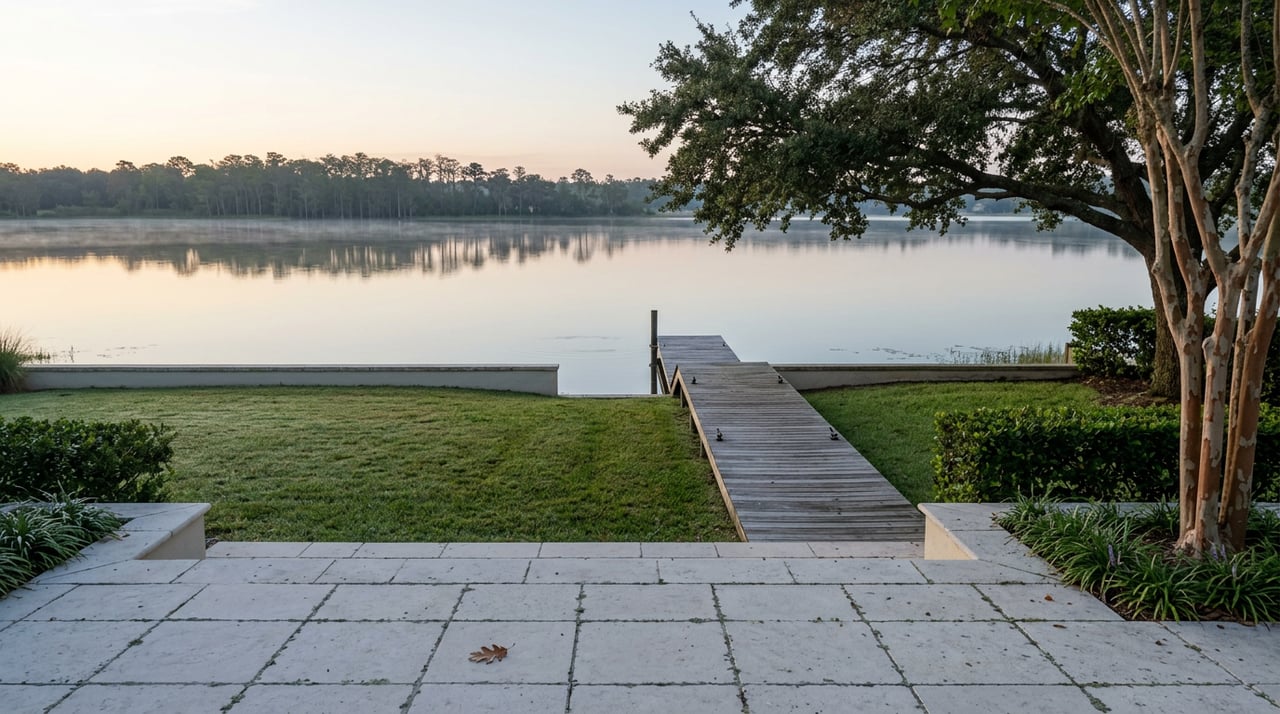
Venetian Estates was platted around 1959 and built out through the following two decades around the 44-acre Lake Venice. Most of the original housing stock is still standing: ranch-style homes on half-acre lots, some untouched since the 1970s. A recent Redfin pull for the neighborhood shows homes for sale sitting on the market for an average of 98 days, roughly triple the 26-to-33-day pace reported for the broader Sugar Land market over the same 2026 stretch.
At the same time, the neighborhood's waterfront segment has been behaving like a completely different product. In a recent listing snapshot, two waterfront homes were on the market at a median price of $2.1 million, flagged as "hot homes" likely to sell quickly. One new-construction estate, built by Partners in Building on a 16,509-square-foot lakefront lot, was marketed with a target completion of July 2026 at a price point well above the neighborhood's historical norm. Meanwhile, non-waterfront listings on streets like Bay Bridge Drive and Brook Shore Court have recently ranged from roughly $634,900 to $899,000, homes that are updated but not new construction, not on the water, and not competing in the same buyer pool as the lakefront estates.
An unrenovated 1968 ranch a block from the water and a new-construction estate on a half-acre lakefront lot can both carry a "Venetian Estates" address. They are not the same market. A single days-on-market figure or a single median blends them into a number that describes neither one accurately.
| Sugar Creek | Venetian Estates | |
|---|---|---|
| Defining amenity | Sugar Creek Country Club, three golf courses | 44-acre Lake Venice |
| Gated? | Not listed among Sugar Land's guard-gated communities | Not marketed as gated |
| Built | Late 1960s onward | Platted circa 1959, built through the 1970s |
| Recent volatility driver | Low monthly sales volume (9 to 17 homes) | Bifurcated lot types (original ranch vs. waterfront rebuild) |
| Where value concentrates | Golf-course frontage and larger lots on streets like Sugar Creek Blvd | Waterfront and rebuilt lots |
A neighborhood-wide median in a place like this isn't one market's price. It's an average of two or three different markets that happen to share a mailing address.
For a buyer or seller weighing either neighborhood, the practical takeaway is not "avoid Sugar Creek because its median fell" or "Venetian Estates is slow because homes sit for 98 days." Both conclusions would be wrong, and both would come from reading the headline number instead of the transaction underneath it.
The better questions are specific to the property:
This is the kind of analysis that separates a market snapshot from an actual valuation, and it's exactly where a hands-on, locally grounded approach earns its keep. Pulling comps by section and lot type, rather than by neighborhood name alone, is standard practice for anyone doing real investment-grade analysis on Fort Bend property, whether the asset is a single-family home or a commercial parcel.
Neither Sugar Creek nor Venetian Estates is cooling or heating in any simple sense. Both are legacy neighborhoods with wide internal variation and, in Sugar Creek's case, transaction volume too small to produce a stable monthly statistic. The neighborhood-level median is a real number, calculated correctly, and still capable of misleading anyone who treats it as the whole story.
For a buyer comparing these two communities, or a seller trying to price a home in either one, the honest starting point is not the median at all. It's the specific street, the specific lot, and the specific comparable sales that actually resemble the property in question.
If you're weighing a purchase or a listing in Sugar Creek, Venetian Estates, or anywhere else in Fort Bend County and want the analysis to go past the headline number, Fort Bend Real Estate Corporation can walk through the comparables that actually apply to your situation. Schedule a consultation to talk through what your specific address is really worth.

Tell us about your real estate goals, and we'll help you navigate the process with confidence and ease.

Fort Bend Real Estate Corporation
8410 HIGHWAY 90A STE 120 SUGAR LAND TX 77478